
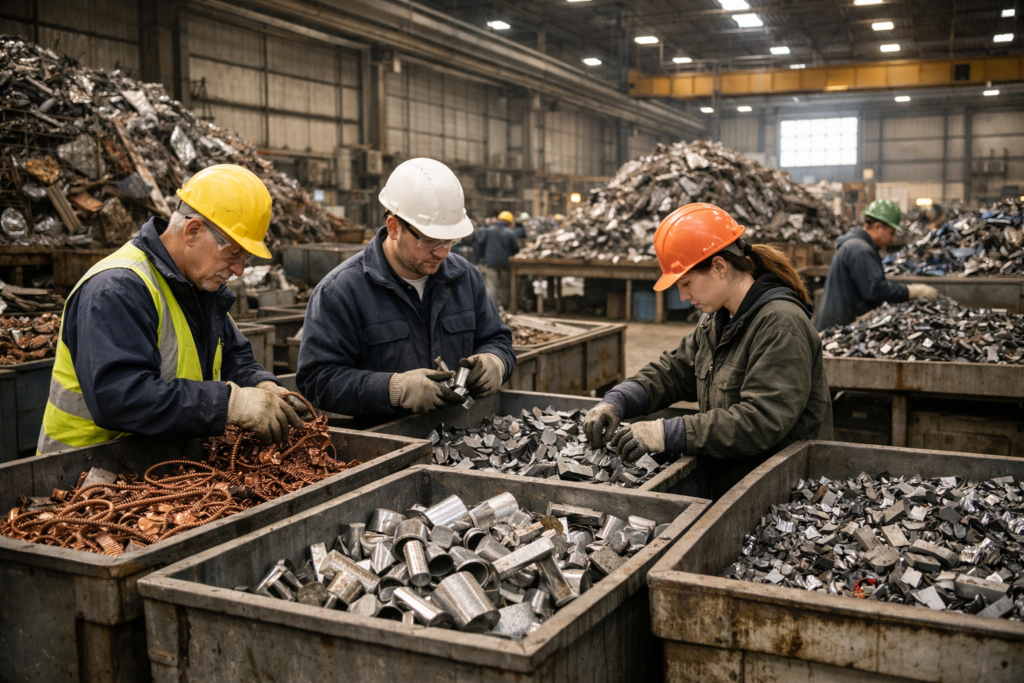
If you walk into most industrial units in Gurgaon—whether in Udyog Vihar, IMT Manesar, or Kadipur—you’ll notice one common thing.
There’s always a corner where scrap slowly collects.
Not because anyone planned it that way. It just happens.
Metal cuttings from fabrication. Rejected components. Broken pallets. Packaging plastic. Old wiring from machine repairs. At first, it’s manageable. Then it grows. And suddenly, that “temporary pile” becomes permanent.
Industrial scrap management isn’t about cleaning up once in a while. It’s about keeping your factory floor under control every single week.
What Industrial Scrap Actually Looks Like (On the Ground)
In real factory operations, scrap is not just metal.
In manufacturing units around Gurgaon, we usually see:
- Iron and MS cutting pieces
- Aluminium sections
- Copper wires and panels
- Damaged racks or sheets
- Plastic wrapping from raw materials
- Wooden pallets
- Discarded electrical equipment
Some units generate a few kilos daily. Others generate tons every month. The problem isn’t the scrap itself. The problem is when it sits too long.
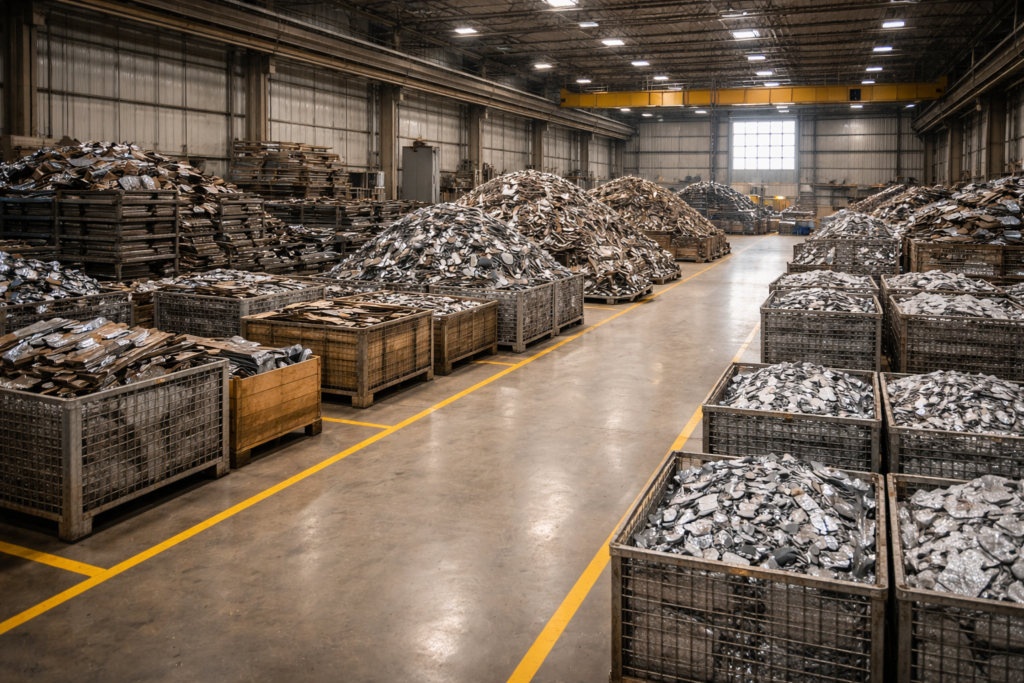
Why Scrap Becomes a Bigger Problem Than Expected
Most factory owners focus on production targets. Scrap handling becomes secondary.
But here’s what actually happens:
Space Slowly Disappears
Warehouses are meant for inventory movement. When scrap occupies loading zones or side passages, forklift movement becomes tighter. That slows operations.
In high-rent industrial areas like Gurgaon, wasting space is expensive.
Safety Gets Compromised
Sharp metal edges, oil-soaked waste, loose wires — all increase risk.
Many minor injuries in factories don’t come from machines. They come from unmanaged scrap lying around.
Money Gets Blocked
This is something many businesses realise late.
Copper and aluminium scrap have strong resale value in the Gurgaon scrap market. But when everything is mixed together, buyers offer lower rates.
Segregation directly impacts how much you earn.
What Proper Scrap Management Actually Means
It’s not complicated.
It’s about routine.
1. Separate Scrap Where It Is Generated
When metal cuttings fall near machines, they should go into a designated metal bin immediately.
When packaging is opened, plastic and cardboard should go into separate containers.
If segregation is delayed, it rarely happens later.
2. Don’t Wait for Scrap to “Look Big”
Many factories wait until scrap piles become visibly large before calling a scrap dealer.
That creates clutter and disrupts operations.
In industrial zones like IMT Manesar and Udyog Vihar, regular scheduled pickup works better than emergency clearance.
Monthly or bi-weekly pickup keeps the floor clean.
3. Work With a Reliable Local Scrap Partner
Factories in Gurgaon benefit from working with scrap dealers who understand:
- Industrial weighing systems
- Transparent rate calculation
- On-time bulk pickup
Proper documentation
Delays in pickup create operational disturbance. Consistency matters more than bargaining for a few extra rupees per kilo.
Common Mistakes Factories Make
After seeing multiple industrial units, the same issues repeat:
- Mixing high-value copper with general iron scrap
- Leaving scrap exposed to rain
- No clear storage area
- No record of scrap disposal
These small gaps reduce value and create compliance risks.
Compliance Is Becoming Important
Environmental norms are stricter now.
Industrial units in Gurgaon are expected to handle waste responsibly, especially electronic and hazardous scrap.
Maintaining basic disposal records protects your business during inspections and audits.
It also builds credibility with clients who expect responsible manufacturing practices.
Scrap Can Become Predictable Secondary Income
When tracked properly, scrap generation becomes measurable.
Some factories in Gurgaon now maintain a simple monthly scrap report. It helps them estimate how much material is recoverable and how much revenue it generates.
Instead of being seen as waste, scrap becomes part of financial planning.
Final Thought
Industrial scrap management doesn’t improve production speed directly.
But it improves everything around it.
Clear floors. Safer movement. Better organization. Extra income.
Factories and warehouses in Gurgaon that treat scrap as a managed resource — not just leftover waste — run smoother operations.
Scrap is unavoidable.
Mismanagement isn’t.