
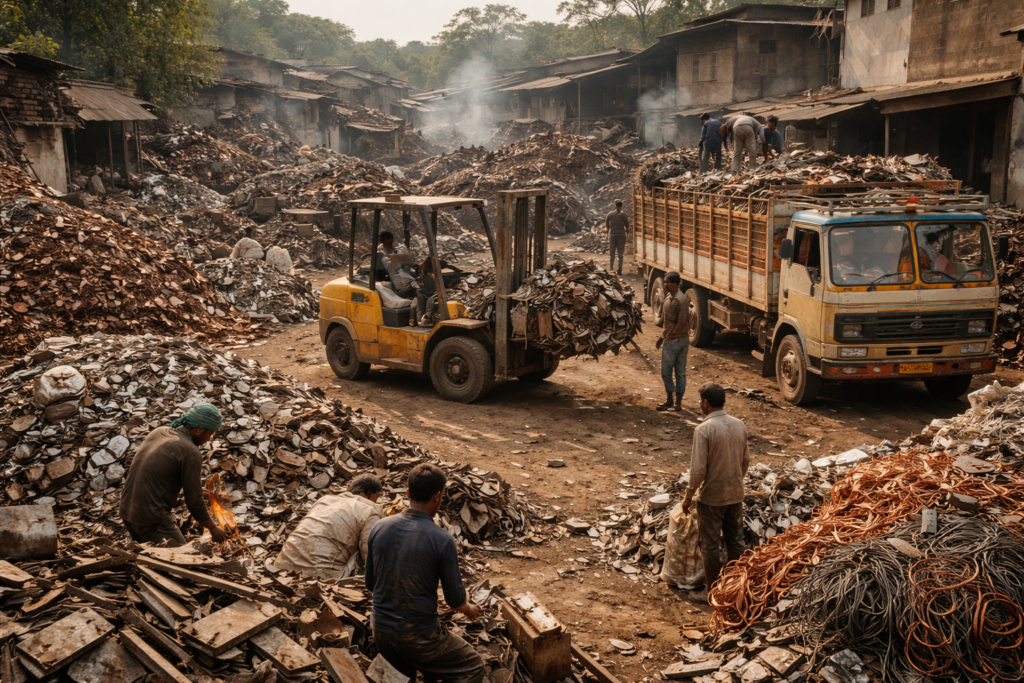
In most factories, scrap is not something people think about every day
Work keeps running, machines keep producing, and small leftover pieces just get pushed to one side. Nobody really plans it that way. It just happens.
A few metal cuttings today, some broken parts tomorrow, and maybe packaging waste after that. Slowly, one corner becomes two. Then after a month or two, you realise that space is no longer “temporary storage.”
It has become a problem.
One thing that gets affected first is space
Warehouses are usually planned very carefully. There are fixed areas for stock, loading, unloading, and movement. When scrap starts taking over, it doesn’t follow any plan. It just spreads wherever there is empty space.
People adjust in the beginning. They walk around it, shift things a little, try to manage. But after some time, it starts slowing things down.
Forklifts don’t move as easily. Workers have to take longer routes. Even simple tasks begin to take more time than they should.
Then there’s the safety part
Loose metal, sharp edges, wires lying around… these things don’t look serious until someone trips or gets a cut. Many small accidents in warehouses happen because of things that were left unattended.
It’s not always a big incident, but even small injuries affect work.
When scrap is cleared regularly, the floor stays open and movement becomes safer without anyone even noticing the difference.
Another thing people don’t think about much is value
Scrap is not always useless. Materials like copper, aluminium, and even iron have proper market rates. When they are mixed together and left for months, their value often drops.
But when they are cleared and separated on time, you actually get better returns.
Some factories have realised this and treat scrap like a small extra income instead of waste.
There is also a practical side to it
If scrap is removed regularly, the whole place feels more manageable. You don’t have to plan a big cleanup every few months. There’s no sudden rush to clear everything at once.
It just becomes part of routine.
Some places fix a simple schedule — maybe once a month, maybe twice — depending on how much scrap they generate. That alone solves most of the problem.
What usually causes trouble is delay
People wait, thinking they’ll clear everything together later. Meanwhile, the pile keeps growing. By the time they act, it takes more effort, more time, and sometimes even disrupts regular work.
Regular disposal avoids that situation completely.
In the end, scrap is something every factory or warehouse has to deal with. There’s no way around it.
But how often you clear it makes a big difference.
Ignore it, and it slowly creates issues. Handle it regularly, and it stays under control without much effort.
That’s really all there is to it.